Road Conditions in Uganda National Parks: A Park-by-Park Driving Guide
Discover the road conditions in Uganda national parks, including driving tips, 4×4 requirements, seasonal challenges, and the best routes for safaris.
Ask ten travelers what Uganda’s roads are actually like, and you’ll get ten different answers — because the honest truth is that road conditions vary enormously from one national park to the next, and even within the same park depending on the season.
Understanding what you’re actually driving into before you book a vehicle is exactly what separates a smooth safari from a stressful one. This guide breaks down road conditions in Uganda’s national parks one park at a time, so you know exactly what terrain to expect and which vehicle genuinely suits it.
The General Picture: Uganda’s Roads at a Glance
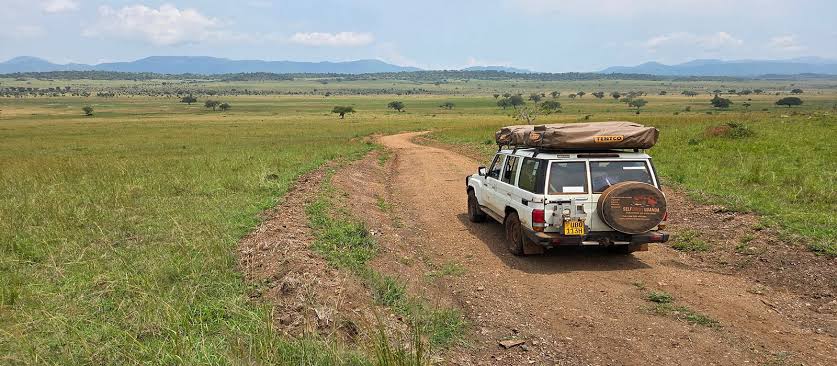
Uganda’s road network splits cleanly into two categories: well-maintained tarmac connecting major towns and cities, and unpaved murram (gravel and dirt) roads inside and leading to most national parks.
That second category is where road conditions genuinely shift with the seasons — dry months (June–September and December–February) leave murram roads firm and dusty but manageable, while the rainy seasons (March–May and September–November) can turn the same stretches into genuinely challenging mud, particularly on routes with steep gradients or clay-heavy “black cotton” soil.
Uganda also drives on the left-hand side, a detail worth keeping in mind regardless of which park you’re headed to.
Murchison Falls National Park: Manageable Gravel with a Few Slippery Stretches
Murchison Falls’ road network is a mix of graded gravel tracks across the Buligi game-viewing circuit, generally in decent condition during the dry season.
The park’s black cotton soil sections near the Nile floodplain can turn genuinely slick after rain, and the Paraa ferry crossing adds a logistical step most other parks don’t require.
Overall, Murchison is one of the more forgiving parks for a confident self-drive 4×4, though a vehicle with real ground clearance still matters for the rougher game-drive tracks off the main routes.
Queen Elizabeth National Park: Good Main Tracks, Rougher in Ishasha
Queen Elizabeth’s core road network around the Kazinga Channel and Mweya Peninsula is comparatively well maintained, with wide, regularly graded tracks suited to most 4×4 vehicles without much drama.
The Ishasha sector, home to the park’s famous tree-climbing lions, is a different story — more remote, less frequently graded, and genuinely rougher going, particularly in wet weather. A vehicle with solid off-road capability matters more here than on the park’s main circuit.
Bwindi Impenetrable Forest: Uganda’s Toughest Driving Conditions
If one park defines “you need a proper 4×4,” it’s Bwindi. The roads leading to gorilla trekking access points — particularly routes into the Rushaga and Nkuringo sectors — are steep, narrow, and winding, carved into genuinely mountainous terrain.
These roads turn treacherously slippery during rain, with gradients steep enough that low-range 4×4 capability isn’t a luxury, it’s a requirement.
This is exactly why a robust vehicle like the Land Cruiser Extended or Land Cruiser TX consistently outperforms a smaller SUV on the Bwindi approach roads specifically.
Kidepo Valley National Park: Remote, Rough, and Worth the Distance
Kidepo Valley, tucked into Uganda’s far northeastern Karamoja region, demands the longest drive of any major park — and the roads leading in, while improved over recent years, remain genuinely rough and dusty for long stretches.
Fuel stations thin out considerably the further north you travel, making advance fuel planning essential. Once inside the park, internal tracks are manageable for a well-equipped 4×4, but the isolation itself is the bigger practical consideration here more than the road surface.
Lake Mburo National Park: Uganda’s Most Accessible Park
Lake Mburo, the closest major park to Kampala, offers some of the most forgiving road conditions of any Ugandan national park — a mix of decent gravel and even some tarmac sections on the approach.
This accessibility is exactly why Lake Mburo works well even with a more compact vehicle like a Toyota RAV4, rather than requiring the heavier-duty 4×4s better suited to Bwindi or Kidepo.
Semuliki National Park and Mgahinga Gorilla National Park
Semuliki, in Uganda’s remote west, has less-trafficked access roads that can deteriorate quickly in wet weather, given how little through-traffic keeps them graded compared to the country’s more visited parks. Mgahinga, sharing the same volcanic, mountainous terrain as Bwindi’s southern sectors, presents similarly steep, winding roads — the same 4×4 logic that applies to Bwindi applies here too.
Matching Your Vehicle to the Terrain
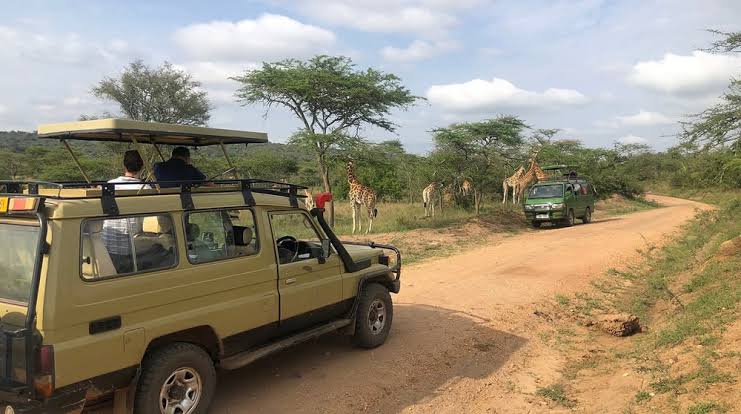
The clearest pattern across all seven parks: the more mountainous and remote the destination, the more a genuine 4×4 with real ground clearance and low-range capability matters, while more accessible parks like Lake Mburo and Queen Elizabeth’s main circuit tolerate a lighter vehicle without much compromise.
Our guide on choosing the best car for Ugandan roads breaks this down vehicle by vehicle, and our car rental for wildlife safaris page covers how this terrain variation shapes which rental actually makes sense for your specific itinerary.
Seasonal Timing Matters as Much as the Park Itself
Regardless of which park you’re visiting, timing your trip for the dry season — June to September or December to February — consistently delivers the easiest driving conditions.
Traveling during the rainy season is entirely possible with the right vehicle and a realistic expectation of slower going, particularly around Bwindi and Mgahinga’s steeper approach roads. Our tips for first-time car rental in Uganda guide covers how to prepare for either season before you set off.
Self-Drive or Chauffeur-Driven, Given These Conditions?
Confident, experienced drivers can genuinely self-drive most of these parks successfully, provided the vehicle matches the terrain — our self-drive car rental guide covers what that actually requires.
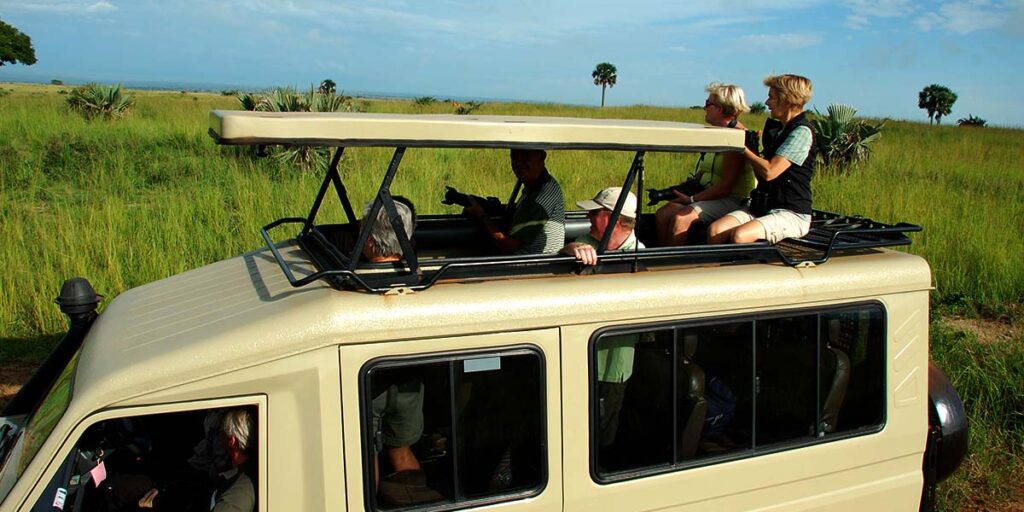
Travelers less comfortable navigating steep, unfamiliar mountain roads, particularly around Bwindi, often prefer a local driver who already knows these specific routes intimately. Both options are available across our fleet, and adding a pop-up roof to either choice turns any of these drives into a genuine game-viewing opportunity along the way.
Planning a route across multiple parks? Contact our team for vehicle recommendations tailored to your exact itinerary, or browse our full rental fleet to compare every option before you book.
FAQ: Road Conditions in Uganda’s National Parks
Which Uganda national park has the toughest roads? Bwindi Impenetrable Forest, particularly the routes into the Rushaga and Nkuringo sectors, which are steep, narrow, and genuinely slippery in rain.
Which park is easiest to reach with a smaller vehicle? Lake Mburo National Park, thanks to its proximity to Kampala and comparatively well-maintained access roads.
When are Uganda’s park roads at their best? During the dry seasons, June to September and December to February, when murram roads stay firm rather than muddy.
Do I need a 4×4 for every Uganda national park? Not strictly for Lake Mburo or Queen Elizabeth’s main circuit, but a genuine 4×4 with good ground clearance is strongly recommended for Bwindi, Mgahinga, Kidepo, and Ishasha.
Is self-drive realistic on Uganda’s roughest park roads? Yes, for confident drivers in the right vehicle, though many travelers prefer a local driver specifically for Bwindi’s steeper mountain approaches.
Related Car Rental & Safari Guides
- Best Car for Ugandan Roads
- Land Cruiser TX Car Hire
- Land Cruiser Extended Car Rental in Uganda
- Toyota RAV4 Car Hire
- Cheap Self Drive Car Rental Uganda
- Car Rental for Wildlife Safaris
- Car Rental with Pop-Up Roof
- Tips for First-Time Car Rental in Uganda
- Uganda’s Top Safari Destinations
- Full Rental Fleet